Judge’s Pet, PRA Group (PRAA), Owner of Unethical Debt Collector, Stock is Stuck!
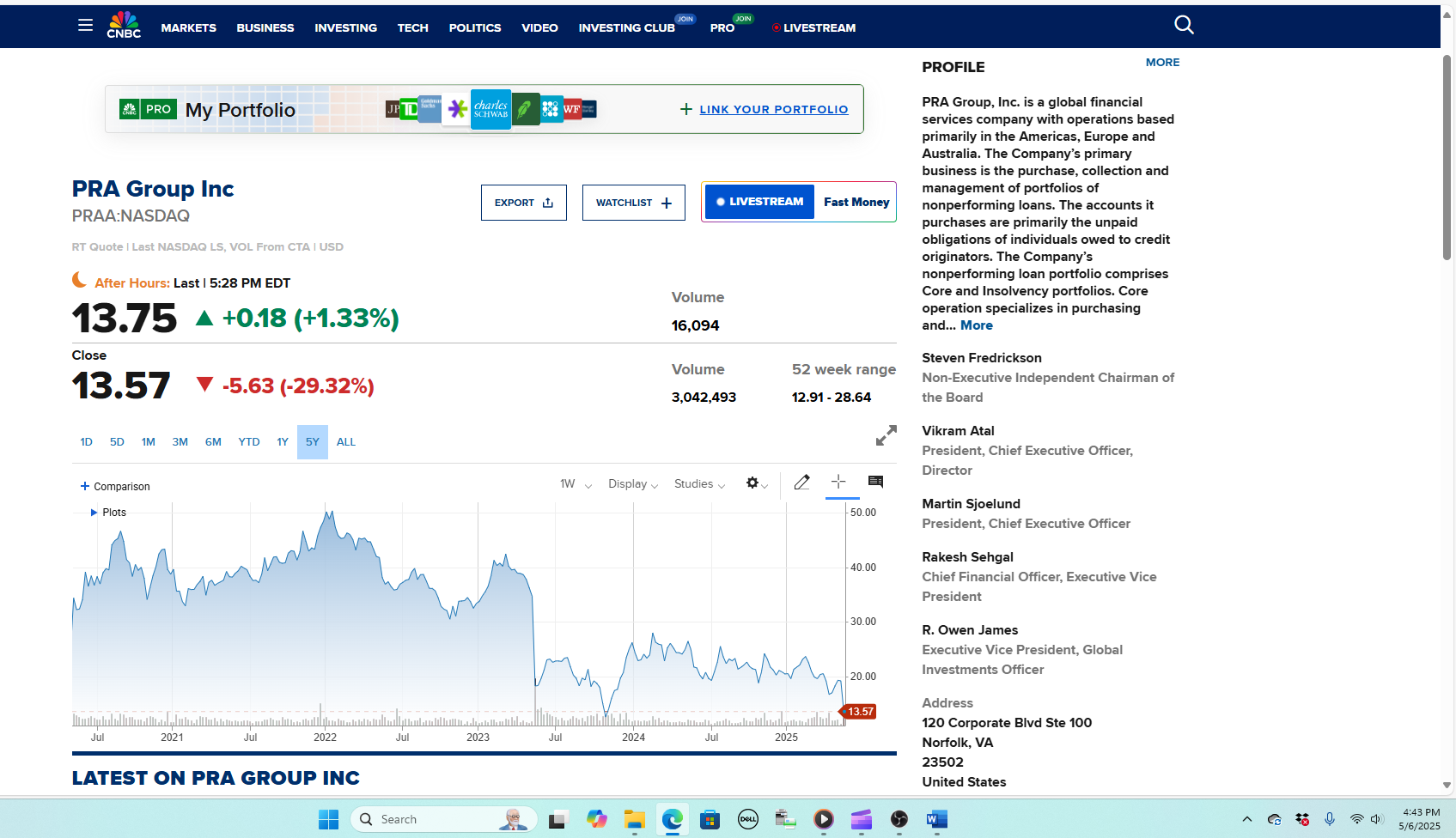

When I filed my lawsuit against Portfolio Recovery Associates in 2021, its parent company PRA Group, Inc’s stock was selling around $20 per share. Today it sold for $13 plus change.
I don’t mean to be a schadenfreudist, but watching PRAA’s stock nosedive genuinely made my day. Maybe true schadenfreude is about undeserved suffering — and this isn’t that. This is earned misery. PRAA is a pet litigant of Federalist Society cabalist Judge Lee Rudofsky, and if justice exists, this is just the beginning of their bad news.
Stop Laughing! There is Nothing Funny About Court Corruption or Judge Susan Weaver
Technology and I are in a love-hate relationship. Thanks for your patience. Hopefully you catch my drift.
Attorney Knows Better Than to Confirm Info — Even When Caller Has Accurate Private Details. But According to Judge Rudofsky and the Eighth Circuit, You’re Supposed to Cooperate Anyway
Portfolio Recovery Associates, the Nation’s second largest debt buyer, made 100s of phone calls to me before I agreed to confirm (or deny) my identity, birthdate and address. After I confirmed my name and birthdate and denied the address they had was one I was familiar with, they told me that I owed $2,297.63 but not by whom, on what, where, or when the account they purportedly purchased was used.
I sued PRA.
The CFPB had already obtained a consent agreement against the debt collector against making phone calls exactly like this one. A couple years after I filed my suit, Portfolio Recovery stipulated to an order to pay another $24 million for continuing to make the harassing collections.
Judge Lee P. Rudofsky threw my suit out on summary judgment. He said it was not more than an acceptable annoyance for a debt collector to make repeated calls if the recipient refused to confirm personal information about themselves on a recorded line. The Eighth Circuit confirmed. SCOTUS denied writ of certiorari to review the orders. (Steve Lehto, at 5:20 of the YouTube video said, “so I said, ‘just so you know, I find this entire phone call annoying’, and I hung up on her.”)
The courts also allowed the supposed evidence that their decision was based on to be kept under seal. I can tell you that the evidence provided did not show that I owed PRA any money and did not show that my estimate of the number of calls made was inaccurate. This begs the question, why would PRA want to keep the records of my account confidential if I begged to have the records made public?
I can’t answer Steve Lehto’s question, but agree with him whole-heartedly that a caller has no right to demand confirmation of identity or anything else. (At 10:10, Mr. Lehto said, “in fact, I didn’t even confirm some of the things that she asked me.”
I pointed out to Judge Rudofsky that the Fourth Amendment of that pesky Constitution forbids demands for identification. The judge said the 4th amendment only applies to government intrusion. By that reasoning, there is separation of church and state, but it is perfectly fine for an individual to tie you to a rock and force you to profess faith in Jesus Christ as your Lord and Savior before the tide comes in. – Well, that is hyperbole. A more literal analogy is that Portfolio Recovery Associates can call you as often as they want if you let the calls go to voicemail and once every three days for answered calls, indefinitely, until you state on a recorded line that Jesus Christ is your Lord and Savior. (For me, that is a true statement, but I don’t think I should have to confirm my faith on a recorded line, nor wear a Star of David on my sleeve.)
And isn’t it interesting, when I said that I could not confirm the address they had on file, PRA went ahead and discussed the alleged debt with me anyhow?
 A Higher Law